The Yoruba Traditional Marriage Ceremony – Customs, Symbols, and Meaning
Introduction
Marriage occupies a central place in Yoruba culture and is regarded as one of life’s most important milestones. More than a union between two individuals, marriage traditionally represents the coming together of families, lineages, communities, and generations. It is both a social and spiritual institution that reflects Yoruba values concerning family, respect, responsibility, and continuity.
The Yoruba traditional marriage ceremony is renowned for its elegance, symbolism, colorful attire, music, and rich cultural rituals. Every stage of the process carries meaning, from the first introduction between families to the exchange of gifts and blessings.
Although modern influences have transformed some aspects of marriage practices, traditional Yoruba wedding customs remain widely observed throughout Nigeria and the Yoruba diaspora.
This article explores the history, customs, symbolism, and significance of the Yoruba traditional marriage ceremony.

The Meaning of Marriage in Yoruba Society
In traditional Yoruba thought, marriage serves several important purposes.
These include:
- Family formation
- Social stability
- Cultural continuity
- Community development
- Raising future generations
Marriage is not viewed solely as a private relationship.
Instead, it is understood as an institution that strengthens society as a whole.
As a result, families and elders often play important roles in the marriage process.
Family and Community Importance
The Yoruba place strong emphasis on family relationships.
When two people marry, the union affects:
- Parents
- Siblings
- Extended relatives
- Community members
Marriage therefore creates bonds between entire families rather than only between a bride and groom.
This communal perspective contributes to the elaborate nature of traditional ceremonies.
Courtship in Traditional Yoruba Society
Historically, courtship involved greater family participation than is common today.
Families often considered factors such as:
- Character
- Reputation
- Family background
- Work ethic
- Moral conduct
While affection remained important, marriage was also viewed as a partnership with broader social implications.
The objective was to create stable and harmonious households.
The Introduction Ceremony
The first formal step in many Yoruba marriage processes is the introduction ceremony.
This event allows the groom’s family to formally meet the bride’s family.
The purpose is to:
- Express intentions
- Build relationships
- Seek approval
The atmosphere is usually respectful and cordial.
The introduction establishes the foundation for subsequent wedding arrangements.
The Role of Elders
Elders play important roles throughout the marriage process.
Their responsibilities may include:
- Offering advice
- Supervising negotiations
- Preserving customs
- Providing blessings
Respect for elders is a core Yoruba value.
Their involvement reflects the belief that experience and wisdom contribute to successful marriages.
Investigation of Family Background
Traditionally, families often sought information about one another before approving a marriage.
Areas of interest included:
- Character
- Family reputation
- Health history
- Social conduct
The objective was not discrimination but the promotion of stable family relationships.
These practices reflected the communal nature of marriage.
Bride Price and Symbolic Gifts
One important aspect of Yoruba marriage traditions is the presentation of symbolic gifts.
These items may include:
- Kola nuts
- Alligator pepper
- Honey
- Fruits
- Fabrics
- Monetary gifts
The exchange symbolizes respect and appreciation rather than the purchase of a spouse.
The gifts carry cultural and spiritual significance.
Understanding the Bride Price
The bride price is often misunderstood by outsiders.
In Yoruba culture, it serves primarily as a symbolic gesture.
Its purposes include:
- Honoring the bride’s family
- Demonstrating commitment
- Formalizing the union
The emphasis is typically on symbolism rather than financial value.
The tradition reinforces mutual respect between families.
The Engagement Ceremony
The traditional engagement ceremony is one of the most celebrated components of Yoruba weddings.
It usually includes:
- Family introductions
- Gift presentation
- Ritual performances
- Blessings
The event combines solemnity with celebration.
It provides an opportunity for families to publicly affirm the union.
Traditional Attire
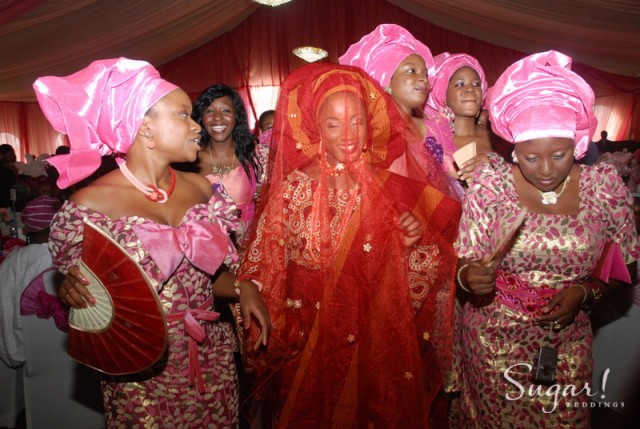
Yoruba weddings are famous for their spectacular clothing.
Traditional attire often includes:
For the Groom
- Avada
- Buba
- Sokoto
- Cap (Fila)
For the Bride
- Ireau
- Buba
- Gele
- Ipele
The garments are often made from Aso Oke, one of the most prestigious Yoruba fabrics.
The Significance of Assaus Ebbi
A distinctive feature of Yoruba celebrations is Assaus Ebbi.
Assaus Ebbi refers to coordinated fabrics worn by relatives and friends.
The practice symbolizes:
- Unity
- Family solidarity
- Collective participation
Colorful Assaus Ebbi groups contribute to the visual beauty of wedding ceremonies.
The tradition remains highly popular today.
Prostration by the Groom
One of the most recognizable Yoruba wedding customs is the groom’s prostration before the bride’s family.
The groom, often accompanied by friends, lies face down on the floor.
This act symbolizes:
- Respect
- Humility
- Gratitude
The gesture demonstrates the groom’s willingness to honor his future wife’s family.
It is one of the most cherished traditions of Yoruba weddings.
Kneeling by the Bride
The bride traditionally kneels before her parents and elders.
This act symbolizes:
- Respect
- Appreciation
- Obedience
- Gratitude
She receives prayers and blessings for her future married life.
The ritual highlights the importance of family guidance and support.
The Role of Prayer
Prayer occupies a central place in Yoruba marriage ceremonies.
Families offer prayers for:
- Fertility
- Prosperity
- Health
- Harmony
- Longevity
Whether traditional, Christian, or Islamic, these prayers reflect the belief that marriage requires divine support and guidance.
Symbolic Foods
Certain foods and items used during ceremonies possess symbolic meanings.
Examples include:
Honey
Represents sweetness in marriage.
Salt
Represents value and preservation.
Kola Nut
Represents hospitality and unity.
Fruits
Represent abundance and fertility.
These symbols communicate hopes for a successful union.
Music and Entertainment
Music plays an essential role in Yoruba weddings.
Traditional instruments may include:
- Talking drums
- Bata drums
- Percussion ensembles
Music creates a festive atmosphere and celebrates cultural identity.
Singing and dancing are often integral parts of the ceremony.
Traditional Marriage and Religion
Historically, Yoruba marriage customs were closely linked to traditional spirituality.
Today, many weddings combine cultural traditions with:
- Christianity
- Islam
- Contemporary practices
This blending reflects the adaptability of Yoruba culture.
Traditional elements often coexist with religious observances.
The Importance of Fertility
Children have traditionally been regarded as blessings within Yoruba society.
Marriage ceremonies frequently include prayers for:
- Fertility
- Healthy children
- Family continuity
These prayers reflect the importance placed on future generations.
Family expansion is often viewed as a significant purpose of marriage.
Marriage as a Partnership
Although traditional gender roles existed, Yoruba culture generally recognizes marriage as a partnership.
Successful marriages require:
- Cooperation
- Respect
- Communication
- Shared responsibility
These principles continue to guide many families today.
Advice from Elders
Wedding ceremonies often include advice from elders.
Common themes include:
- Patience
- Fidelity
- Respect
- Hard work
- Understanding
Such guidance reflects accumulated wisdom concerning family life.
The advice is intended to help couples build lasting relationships.
Modern Transformations
Contemporary Yoruba weddings have evolved in response to social change.
Modern influences include:
- Urbanization
- Globalization
- Technology
- International fashion trends
Despite these changes, many traditional customs remain important.
Families continue to value cultural heritage.
Yoruba Weddings in the Diaspora
Yoruba communities throughout the world continue to celebrate traditional weddings.
These ceremonies help preserve:
- Language
- Customs
- Family values
- Cultural identity
The tradition remains vibrant among diaspora communities.
Economic and Social Impact
Weddings contribute significantly to local economies.
They support:
- Fashion designers
- Musicians
- Caterers
- Event planners
- Photographers
The celebration of marriage therefore has both cultural and economic significance.
Marriage and Social Stability
Historically, marriage has contributed to community stability.
Strong families support:
- Child development
- Economic cooperation
- Cultural transmission
Marriage therefore occupies an important place within the broader social structure.
Lessons from Yoruba Marriage Traditions
Yoruba marriage customs teach valuable lessons:
- Family relationships matter.
- Respect strengthens partnerships.
- Community support is important.
- Tradition and modernity can coexist.
- Marriage requires commitment and responsibility.
These lessons remain relevant in contemporary society.
Preservation of Marriage Customs
Cultural organizations, families, and community leaders continue working to preserve traditional wedding practices.
Their efforts include:
- Documentation
- Education
- Cultural events
- Intergenerational teaching
Preservation ensures that future generations remain connected to their heritage.
Conclusion
The Yoruba traditional marriage ceremony is one of the most beautiful and meaningful cultural institutions in Africa. Through rituals, symbols, prayers, music, and family participation, it celebrates not only the union of two individuals but also the strengthening of community bonds.
Its customs emphasize respect, responsibility, cooperation, and continuity. While modern influences have introduced new elements, the core values underlying Yoruba marriage remain remarkably resilient.
As a living expression of Yoruba identity and heritage, the traditional marriage ceremony continues to inspire pride and preserve cultural wisdom for future generations.