The Yoruba Traditional Religion and the Orisha System
Introduction
The Yoruba Traditional Religion is one of the oldest, most sophisticated, and most influential indigenous belief systems in Africa. Developed over centuries by the Yoruba people of present-day southwestern Nigeria, Benin, and Togo, it provides a comprehensive understanding of the universe, humanity, morality, spirituality, and the relationship between the visible and invisible worlds.
At the heart of Yoruba spirituality is the Orisha system, a rich network of divine beings who serve as intermediaries between humanity and the Supreme Creator. Through rituals, festivals, prayers, divination, music, and community practices, Yoruba religion has shaped the culture, values, and worldview of millions of people.
Despite the spread of Christianity and Islam throughout Yorubaland, traditional Yoruba beliefs continue to influence religious life, cultural practices, art, literature, and identity. Through the African diaspora, Yoruba spirituality has also become a global phenomenon, influencing religious traditions in the Caribbean, Latin America, North America, and beyond.

Understanding Yoruba Traditional Religion
Yoruba Traditional Religion is more than a collection of rituals.
It is a complete worldview that addresses:
- Creation
- Human destiny
- Morality
- Community life
- Nature
- Spiritual forces
The religion teaches that the universe is interconnected.
Humans, ancestors, spirits, divine beings, and the natural world exist within a complex network of relationships.
Maintaining harmony within these relationships is considered essential for individual and communal well-being.
Belief in a Supreme Creator
At the center of Yoruba spirituality is belief in a Supreme Being known as Olodumare.
Olodumare is regarded as:
- The Creator of the universe
- The source of all life
- The ultimate authority
- The giver of destiny
Unlike many other spiritual beings, Olodumare is generally viewed as transcendent and beyond direct human interaction.
The Supreme Creator is:
- Omnipotent
- Omniscient
- Eternal
- Perfect
All spiritual power ultimately originates from Olodumare.
The Meaning of Orisha
One of the most distinctive features of Yoruba religion is the concept of Orisha.
Orisha are divine beings who serve as intermediaries between humanity and Olodumare.
Each Orisha possesses unique responsibilities and attributes.
They are associated with:
- Natural forces
- Human activities
- Moral principles
- Historical figures
- Cosmic functions
Through the Orisha, believers seek guidance, protection, healing, wisdom, and spiritual support.
Origins of the Orisha System
The origins of the Orisha system are rooted in centuries of Yoruba spiritual development.
Some Orisha are believed to have existed from the beginning of creation.
Others are associated with historical individuals whose achievements led to their deification.
The system evolved through:
- Oral tradition
- Religious practice
- Community experience
- Historical memory
This dynamic process contributed to the richness and diversity of Yoruba spirituality.
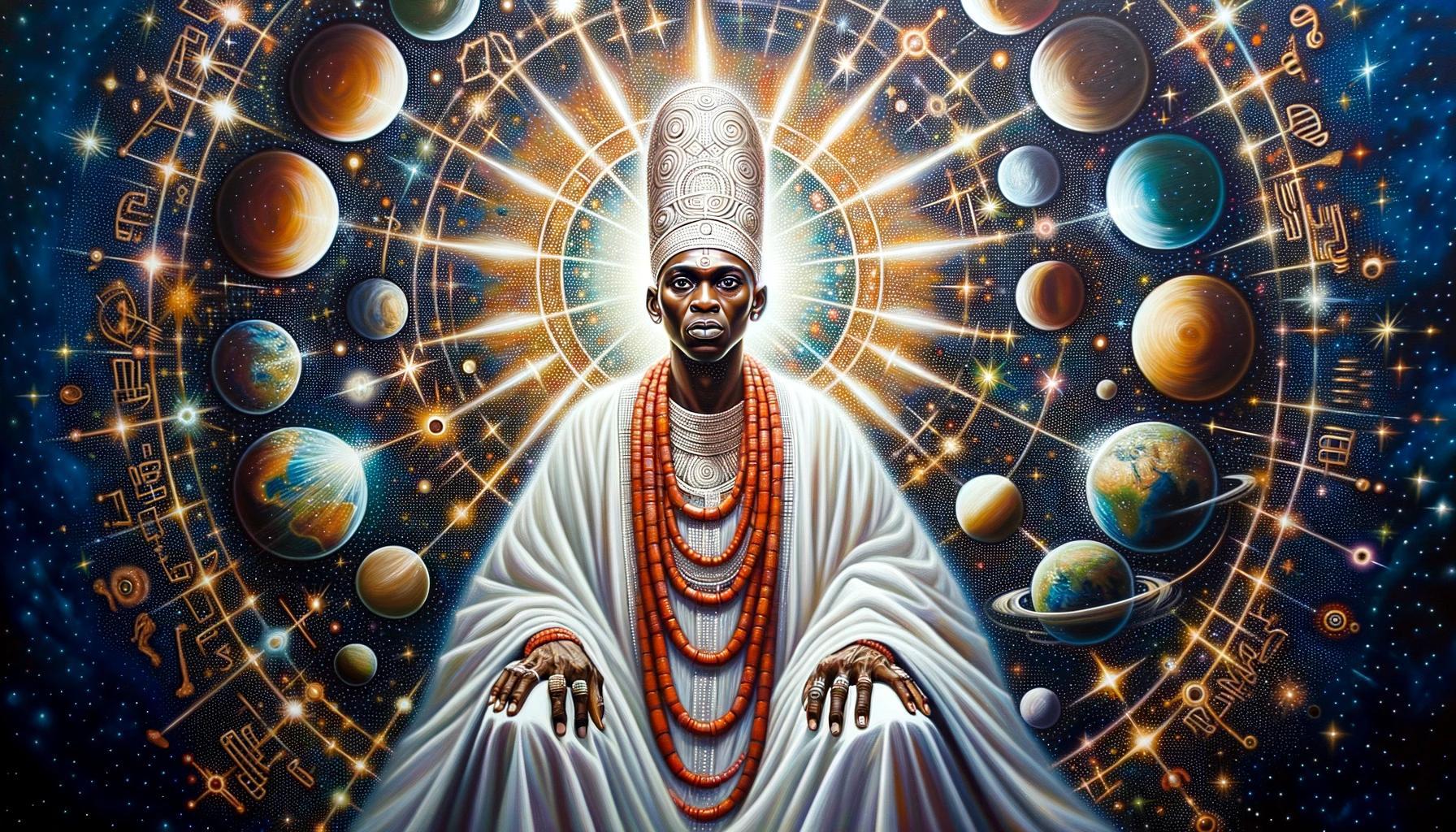
Obatala: The Orisha of Creation
Among the most important Orisha is Obatala.
According to Yoruba tradition, Obatala played a central role in the creation of humanity.
He is associated with:
- Wisdom
- Purity
- Compassion
- Peace
Obatala is often depicted wearing white, symbolizing spiritual cleanliness and moral integrity.
Many believers regard him as a model of patience and ethical behavior.
Sango: Orisha of Thunder and Lightning
Sango occupies a prominent place in Yoruba religion.
Originally remembered as a powerful Alaafin of Oyo, he later became deified.
Sango is associated with:
- Thunder
- Lightning
- Fire
- Justice
- Leadership
His worship remains widespread throughout Yorubaland and the African diaspora.
Devotees often seek his assistance in matters involving courage, truth, and protection.
Ogun: Orisha of Iron and Technology
Ogun is the Orisha associated with iron, technology, labor, and warfare.
He is revered by:
- Blacksmiths
- Farmers
- Mechanics
- Soldiers
- Engineers
Ogun symbolizes:
- Hard work
- Innovation
- Determination
- Productivity
His importance reflects the crucial role of technology and craftsmanship in Yoruba society.
Esu: Messenger and Divine Communicator
Esu occupies a unique position within Yoruba spirituality.
Often misunderstood by outsiders, Esu is not viewed as an embodiment of evil.
Instead, he serves as:
- Messenger between worlds
- Guardian of communication
- Enforcer of divine justice
Esu ensures that spiritual messages reach their intended destinations.
His role highlights the importance of communication and accountability.
Yemoja: Mother of Waters
Yemoja is one of the most beloved Orisha.
She is associated with:
- Motherhood
- Fertility
- Rivers
- Nurturing care
Many devotees regard her as a protective maternal figure.
Her worship emphasizes compassion, family, and emotional well-being.
Yemoja remains especially important in Yoruba communities throughout the world.
Osun: Orisha of Beauty and Prosperity
Osun is associated with:
- Love
- Beauty
- Fertility
- Prosperity
- Fresh water
She is celebrated for her grace and generosity.
The annual Osun festival attracts participants from around the globe.
Her worship emphasizes harmony, creativity, and abundance.
Oya: Orisha of Transformation
Oya governs:
- Winds
- Storms
- Change
- Transformation
She symbolizes the dynamic forces that shape human experience.
Oya teaches that growth often requires adaptation and courage.
Her association with transformation makes her a powerful symbol of resilience.
Ancestor Veneration
Respect for ancestors is an important aspect of Yoruba spirituality.
Ancestors are believed to remain connected to their descendants.
They provide:
- Guidance
- Protection
- Wisdom
- Moral example
Ancestor veneration reinforces family continuity and cultural identity.
It also emphasizes gratitude toward previous generations.
The Concept of Destiny
A central belief in Yoruba religion is the concept of Ori.
Ori can be understood as a person’s spiritual essence or destiny.
Before birth, individuals are believed to choose their destiny.
Life involves fulfilling this divine purpose.
Success depends not only on effort but also on alignment with one’s Ori.
This concept encourages self-awareness and personal responsibility.
Ifa Divination
One of the most sophisticated aspects of Yoruba religion is the Ifa divination system.
Ifa serves as a means of obtaining spiritual guidance.
Specially trained priests known as Babalawo interpret messages contained within sacred verses.
Divination may address questions concerning:
- Health
- Relationships
- Business
- Community affairs
- Personal development
The Ifa corpus contains vast amounts of philosophical and ethical knowledge.
The Role of Babalawo
Babalawo are respected religious specialists.
Their responsibilities include:
- Divination
- Counseling
- Education
- Ritual leadership
Becoming a Babalawo requires extensive training and discipline.
These individuals help preserve Yoruba spiritual knowledge across generations.
Rituals and Worship
Yoruba religious practice involves a variety of rituals.
These may include:
- Prayer
- Offerings
- Music
- Dance
- Festivals
- Divination ceremonies
Rituals strengthen relationships between individuals, communities, and spiritual forces.
They also provide opportunities for reflection and communal participation.
Sacred Music and Drumming
Music plays a vital role in Yoruba spirituality.
Drums are used to:
- Communicate spiritual messages
- Accompany rituals
- Honor Orisha
- Create communal unity
Different rhythms may be associated with specific Orisha.
Music transforms religious ceremonies into powerful cultural experiences.
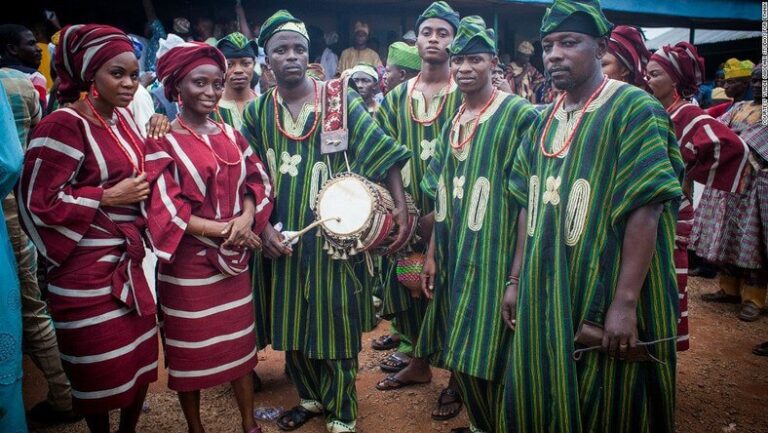
Festivals in Yoruba Religion
Festivals celebrate both spiritual and community life.
Examples include festivals dedicated to:
- Osun
- Sango
- Ogun
- Yemoja
These events often feature:
- Processions
- Performances
- Prayers
- Traditional attire
Festivals help preserve cultural traditions while strengthening social bonds.
Morality and Ethics
Yoruba religion places strong emphasis on ethical conduct.
Core values include:
- Honesty
- Respect
- Responsibility
- Generosity
- Justice
Moral behavior is considered essential for maintaining harmony with both society and spiritual forces.
Ethics are therefore central rather than secondary to religious life.
Yoruba Religion and Nature
Nature occupies a sacred place in Yoruba spirituality.
Many natural features are associated with Orisha, including:
- Rivers
- Forests
- Mountains
- Trees
This perspective encourages respect for the environment and recognition of humanity’s connection to the natural world.
Survival Through Colonialism
The colonial era brought significant challenges to indigenous religions.
Christian missionaries often criticized traditional beliefs.
Despite these pressures, Yoruba spirituality survived.
Many practices continued through:
- Oral tradition
- Family customs
- Community festivals
This resilience reflects the deep roots of the religion within Yoruba society.
Global Influence Through the Diaspora
The Atlantic Slave Trade spread Yoruba spirituality across the world.
In different regions, Yoruba traditions contributed to:
- Santería in Cuba
- Candomblé in Brazil
- Orisha traditions in Trinidad and Tobago
- Other Afro-descendant religions
These traditions preserve many Yoruba beliefs while adapting to local circumstances.
Their existence demonstrates the global influence of Yoruba culture.
Contemporary Relevance
Today, Yoruba Traditional Religion continues to attract followers and scholars.
Its teachings remain relevant to discussions concerning:
- Identity
- Ethics
- Community
- Spirituality
- Cultural heritage
Many people appreciate its emphasis on balance, responsibility, and interconnectedness.
The religion remains a living tradition rather than merely a historical artifact.
Lessons from Yoruba Spirituality
The Yoruba religious tradition offers important lessons:
- Humanity is connected to the wider universe.
- Respect for others promotes harmony.
- Wisdom should guide action.
- Cultural heritage deserves preservation.
- Spiritual growth requires personal responsibility.
These teachings continue to inspire people across generations.
Conclusion
The Yoruba Traditional Religion and the Orisha system represent one of Africa’s greatest spiritual and cultural achievements. Through its belief in Olodumare, reverence for the Orisha, respect for ancestors, and emphasis on morality, it provides a comprehensive framework for understanding life and the universe.
Far from being confined to the past, Yoruba spirituality continues to influence millions of people worldwide. Its teachings have survived centuries of change, migration, and cultural transformation while maintaining their essential character.
As a source of wisdom, identity, and community, the Yoruba Traditional Religion remains a vital part of Yoruba heritage and one of the most enduring religious traditions in the world.