The Yoruba Civil Wars of the Nineteenth Century – Conflict, Change, and Survival
Introduction
The nineteenth century was one of the most turbulent periods in Yoruba history. Following centuries of political stability under the Oyo Empire, Yorubaland entered an era of intense conflict characterized by military campaigns, shifting alliances, population movements, and political transformation. These conflicts, collectively known as the Yoruba Civil Wars, reshaped the political, social, and economic landscape of the region.
The wars involved many of the major Yoruba states and communities, including Oyo, Ibadan, Ijebu, Egba, Ekiti, Ijesa, and others. Although the conflicts caused immense suffering, they also produced significant political and social changes that influenced the future of Yorubaland.
The Yoruba Civil Wars represent a critical chapter in the history of West Africa. They illustrate the challenges societies face during periods of political transition while highlighting the resilience and adaptability of the Yoruba people.
This article examines the causes, major conflicts, participants, consequences, and legacy of the Yoruba Civil Wars.

The End of an Era
For centuries, the Oyo Empire served as the dominant political power in Yorubaland.
The empire provided:
- Military protection
- Political leadership
- Economic stability
- Regional coordination
Its influence helped maintain relative order across large areas.
However, by the late eighteenth and early nineteenth centuries, signs of decline became increasingly apparent.
The weakening of Oyo created conditions for instability.
Causes of Oyo’s Decline
Several factors contributed to the decline of the empire.
These included:
- Internal political disputes
- Succession crises
- Administrative challenges
- External pressures
Over time, these problems weakened central authority.
As Oyo’s influence diminished, regional leaders sought greater independence.
Political Fragmentation
The collapse of imperial authority encouraged political fragmentation.
Former tributaries and subordinate communities increasingly pursued their own interests.
Without a dominant power capable of enforcing stability, rivalries intensified.
Competition for influence became a defining feature of the period.
This fragmentation laid the foundation for future conflicts.
Rise of New Political Centers
As Oyo weakened, new centers of power emerged.
These included:
- Ibadan
- Abeokuta
- Ijebu states
- Various Ekiti communities
The rise of these centers reflected changing political realities.
Each sought to protect its interests and expand its influence.
Competition among them often led to confrontation.
Population Movements
The instability associated with imperial decline contributed to widespread migration.
Communities relocated in search of:
- Security
- Economic opportunities
- Political protection
New settlements emerged throughout Yorubaland.
These movements altered demographic patterns and reshaped regional relationships.
Formation of Ibadan
One of the most significant developments of the period was the emergence of Ibadan.
Originally established as a military camp, Ibadan grew rapidly.
Its leaders attracted warriors, traders, and settlers.
Over time, the settlement evolved into a powerful city-state.
Military success became central to its identity.
Ibadan’s Expansion
Ibadan’s leaders pursued expansion through both military and political means.
The city extended influence over neighboring territories.
Its growing power generated concern among other Yoruba states.
Some communities welcomed Ibadan’s protection.
Others viewed its expansion as a threat to their autonomy.
These differing perspectives contributed to conflict.
Competition for Regional Influence
As multiple states sought leadership roles, competition intensified.
Major issues included:
- Territorial control
- Trade routes
- Political authority
The absence of a unifying empire made compromise difficult.
Disputes increasingly escalated into warfare.
Economic Factors
Economic considerations played important roles in many conflicts.
Control of trade routes offered access to:
- Wealth
- Resources
- Political influence
Communities sought to protect commercial interests.
Competition over economic opportunities often reinforced political rivalries.
Trade and Warfare
Trade and warfare became closely interconnected.
Military success could improve access to markets and resources.
Conversely, economic prosperity enabled states to finance military operations.
This relationship contributed to the persistence of conflict.
The Role of Warriors
Military leaders occupied prominent positions during the civil wars.
Successful commanders gained influence through:
- Battlefield achievements
- Strategic skill
- Political leadership
Warrior elites became important actors in regional politics.
Their decisions often shaped the course of events.
Major Conflicts
The Yoruba Civil Wars consisted of numerous interconnected conflicts.
Among the most significant were:
- The Owu War
- Conflicts involving Ibadan
- The Kiriji (Ekiti Parapo) War
These wars collectively transformed Yorubaland.
Each contributed to broader patterns of change.
The Owu War
One of the earliest major conflicts was the Owu War.
The conflict involved alliances of several Yoruba states against Owu.
The war resulted in extensive destruction and displacement.
Its consequences influenced subsequent political developments.
The Owu War demonstrated the growing instability of the period.
Impact of the Owu War
The destruction of Owu altered regional power relationships.
Survivors migrated to new locations.
These population movements contributed to the growth of other communities.
The war’s effects extended far beyond the battlefield.
Its legacy remained visible for generations.
Emergence of Abeokuta
Many displaced populations eventually settled in Abeokuta.
The city developed into an important political and economic center.
Natural defensive advantages enhanced security.
Abeokuta became a refuge for people seeking protection from warfare.
Its rise represents one of the major outcomes of nineteenth-century conflicts.
The Egba Experience
The Egba people played important roles during this period.
Their efforts to establish secure communities contributed to the development of strong political institutions.
Abeokuta emerged as a symbol of resilience and adaptation.
The city’s success reflected broader Yoruba responses to instability.
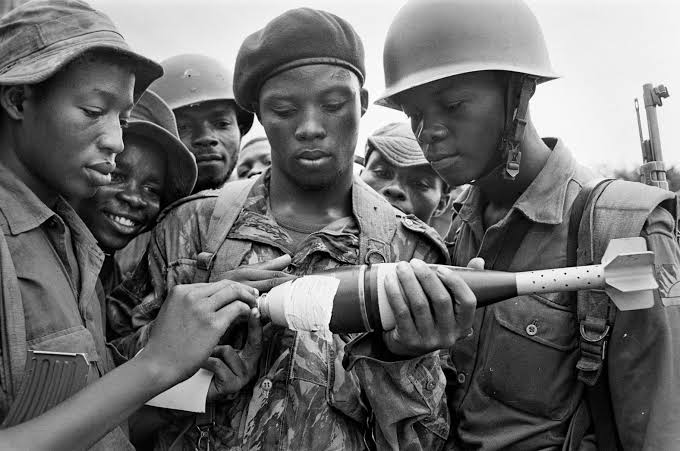
Military Innovation
The civil wars encouraged military innovation.
Leaders adopted new strategies and technologies.
These developments included increased use of:
- Firearms
- Fortifications
- Organized military structures
Adaptation became essential for survival.
Military innovation altered the nature of warfare.
The Introduction of Firearms
Access to firearms changed battlefield dynamics.
Weapons increased the destructive capacity of armies.
Military leaders adjusted tactics accordingly.
The growing importance of firearms reflected broader global changes.
Technology increasingly influenced political outcomes.
Fortified Settlements
Communities responded to insecurity by constructing defensive works.
These included:
- Walls
- Trenches
- Fortifications
Defensive measures provided protection against attack.
They also influenced settlement patterns.
Many communities prioritized security when selecting locations.
Social Consequences of War
The civil wars imposed enormous social costs.
Communities experienced:
- Displacement
- Family separation
- Economic hardship
- Population loss
Daily life became increasingly uncertain.
The social impact extended across generations.
Humanitarian Challenges
Conflict disrupted agricultural production and trade.
Food shortages became common in some areas.
Many civilians faced difficult conditions.
The humanitarian consequences highlight the broader costs of warfare.
Religious and Cultural Change
The period of conflict coincided with significant cultural transformations.
Missionaries expanded activities throughout Yorubaland.
Islam also continued to spread.
Political instability created opportunities for new religious and educational influences.
These developments shaped future generations.
Missionary Activities
Christian missionaries established:
- Schools
- Churches
- Educational programs
Many communities welcomed opportunities for literacy and learning.
Missionary activities introduced new ideas and institutions.
Their influence grew throughout the nineteenth century.
The Kiriji War
The Kiriji War, also known as the Ekiti Parapo War, became the longest major conflict of the period.
The war pitted Ibadan against an alliance of eastern Yoruba states.
It lasted from 1877 to 1893.
The conflict symbolized broader struggles concerning autonomy and political authority.
Significance of the Kiriji War
The Kiriji War represented the final major phase of the Yoruba Civil Wars.
Its duration reflected the determination of all parties involved.
The war eventually ended through negotiation rather than decisive military victory.
Its conclusion marked the end of an era.
External Influences
European powers increasingly observed developments in Yorubaland.
Commercial and political interests encouraged growing involvement.
Although the civil wars remained primarily internal conflicts, external actors monitored events closely.
Their influence expanded over time.
The Arrival of Colonial Rule
The exhaustion produced by decades of warfare weakened many Yoruba states.
As a result, resistance to colonial expansion became more difficult.
British influence increased significantly during the late nineteenth century.
The transition marked the beginning of a new historical period.
Political Transformation
The civil wars transformed Yoruba political structures.
The old imperial order disappeared.
New political realities emerged.
Communities adapted to changing circumstances through innovation and resilience.
The period produced both challenges and opportunities.
Economic Recovery
Following the wars, communities gradually rebuilt economic systems.
Trade resumed.
Agriculture recovered.
Urban centers expanded.
Recovery required considerable effort but demonstrated the adaptability of Yoruba society.
Resilience of the Yoruba People
Despite decades of conflict, Yoruba communities survived and rebuilt.
Their resilience was evident in:
- Economic recovery
- Cultural preservation
- Political adaptation
The ability to recover from hardship became one of the defining features of the period.
Historical Importance
Historians regard the Yoruba Civil Wars as a pivotal turning point.
The conflicts shaped:
- Political institutions
- Settlement patterns
- Economic systems
- Social relationships
Understanding the wars is essential for understanding modern Yoruba history.
Lessons from the Civil Wars
The Yoruba Civil Wars provide important lessons:
- Political stability should not be taken for granted.
- Unity can prevent destructive conflict.
- Economic competition can fuel political tensions.
- Communities can recover from adversity.
- Adaptation is essential during times of change.
These lessons remain relevant today.
Legacy of the Nineteenth Century
The legacy of the civil wars continues to influence Yoruba society.
Modern communities still reflect patterns established during this transformative era.
Historical memory preserves stories of:
- Conflict
- Survival
- Leadership
- Renewal
These narratives remain important components of cultural identity.
Conclusion
The Yoruba Civil Wars of the nineteenth century were among the most significant and transformative events in the history of Yorubaland. Emerging from the decline of the Oyo Empire, the conflicts reshaped political structures, altered settlement patterns, disrupted economies, and influenced cultural development.
Although the wars brought immense suffering, they also revealed the resilience, adaptability, and determination of the Yoruba people. Communities rebuilt, institutions evolved, and new centers of political and economic activity emerged.
Today, the story of the Yoruba Civil Wars serves as a reminder of both the costs of conflict and the capacity of societies to recover and renew themselves. It remains a vital chapter in the history of one of Africa’s most influential civilizations.