The Origins of the Yoruba People
Introduction
The Yoruba people are one of Africa’s largest and most influential ethnic groups. Predominantly found in southwestern Nigeria, as well as parts of Benin and Togo, the Yoruba have developed a rich civilization distinguished by sophisticated political systems, vibrant cultural traditions, artistic excellence, and a profound philosophical worldview. Today, millions of people identify as Yoruba, and their influence extends far beyond West Africa through communities established across the Americas, Europe, and other parts of the world.
Understanding the origins of the Yoruba people is essential to appreciating their remarkable contribution to African history and global culture. While aspects of Yoruba origins are preserved through oral traditions, myths, and archaeological discoveries, the story of the Yoruba people is a fascinating blend of history, legend, migration, and cultural evolution.

The Land of the Yoruba
The traditional homeland of the Yoruba lies in the tropical forest and savannah regions of southwestern Nigeria. This area includes modern states such as Oyo, Ogun, Osun, Ondo, Ekiti, Lagos, and parts of Kwara and Kogi States. Yoruba communities also extend into neighboring Benin and Togo.
The region’s fertile soil, rivers, forests, and strategic location encouraged agriculture, trade, and urban development. These favorable conditions allowed the Yoruba to establish some of the most advanced pre-colonial societies in West Africa.
For centuries, Yoruba cities became centers of commerce, religion, governance, and craftsmanship. The environment played a significant role in shaping Yoruba culture and fostering the growth of powerful kingdoms.
The Oral Tradition of Oduduwa
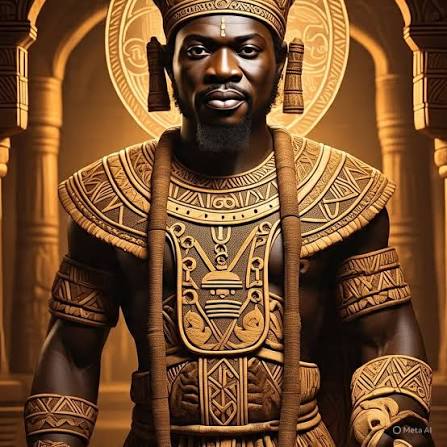
One of the most important accounts of Yoruba origins comes from oral tradition. According to Yoruba mythology, the world was initially covered by water. The Supreme Being, Olodumare, sent a divine figure named Oduduwa to create land and establish human civilization.
The story tells that Oduduwa descended from heaven and arrived at Ile-Ife, carrying a handful of earth, a chicken, and a palm nut. The earth was poured upon the waters, and the chicken spread it across the surface, creating dry land. The palm nut was planted, giving rise to life and prosperity.
Because of this account, Ile-Ife is regarded as the spiritual birthplace of the Yoruba people. Many Yoruba believe that humanity itself began there.
Oduduwa is considered the ancestor of the Yoruba nation. Tradition holds that his descendants founded the major Yoruba kingdoms and established royal dynasties that continue to exist today.
Ile-Ife: The Cradle of Yoruba Civilization
Ile-Ife occupies a special place in Yoruba history. More than a religious center, it became one of the most important urban settlements in ancient West Africa.
Archaeological discoveries have revealed evidence of advanced civilization in Ile-Ife dating back many centuries. The city became renowned for its remarkable bronze and terracotta sculptures, which demonstrate extraordinary artistic skill.
The naturalism and sophistication of Ife artworks surprised early European scholars, many of whom initially doubted that such masterpieces could have been created by African artists. Modern research has firmly established Ile-Ife as one of Africa’s greatest artistic centers.
The city also served as a religious and political nucleus from which Yoruba culture spread throughout the region.
Historical and Archaeological Perspectives
While oral traditions emphasize the role of Oduduwa, historians and archaeologists have sought to understand Yoruba origins through scientific evidence.
Research suggests that the ancestors of the Yoruba developed gradually within the region over many centuries. Archaeological findings indicate continuous human settlement in southwestern Nigeria dating back thousands of years.
Rather than emerging suddenly, Yoruba civilization likely evolved through interactions among various communities that shared language, customs, religious beliefs, and economic networks.
The growth of agriculture, iron-working technology, and long-distance trade contributed significantly to the development of Yoruba society. As settlements expanded, they became increasingly organized and eventually developed into powerful city-states.
The Emergence of Yoruba City-States
One of the unique features of Yoruba civilization was the rise of numerous independent city-states. Unlike centralized empires where power was concentrated in a single ruler, Yoruba political organization often revolved around autonomous cities connected by shared ancestry and cultural traditions.
Important Yoruba city-states included Oyo, Ijebu, Egba, Ife, Ekiti, Ondo, Owu, and many others.
Each city possessed its own ruler, council of chiefs, military structure, and religious institutions. Despite political differences, these communities recognized their cultural connection to Ile-Ife and the legacy of Oduduwa.
This system encouraged both cooperation and competition, leading to innovation, economic growth, and cultural development.
Language as a Unifying Force
The Yoruba language played a critical role in shaping a common identity among diverse communities.
Belonging to the Niger-Congo language family, Yoruba evolved into numerous dialects while maintaining a high degree of mutual intelligibility. This linguistic unity facilitated trade, diplomacy, religious practice, and cultural exchange.
Proverbs, poetry, songs, and oral histories became powerful tools for preserving collective memory. Through language, Yoruba values and traditions were transmitted from generation to generation.
Today, Yoruba remains one of Africa’s most widely spoken indigenous languages, with millions of speakers across the globe.
Religion and Worldview
Traditional Yoruba religion reflects a complex understanding of the universe. At the center is Olodumare, the Supreme Creator. Beneath Olodumare are numerous divine beings known as Orisha, who serve as intermediaries between the spiritual and physical worlds.
Important Orisha include Sango, Ogun, Obatala, Yemoja, and Osun.
The Yoruba worldview emphasizes balance, morality, destiny, wisdom, and communal responsibility. These principles influenced every aspect of social life, from governance and family relations to commerce and artistic expression.
Religion helped unify Yoruba communities and contributed significantly to the preservation of their identity over centuries.
Trade and Economic Development
The Yoruba were accomplished traders and entrepreneurs. Their strategic location enabled them to participate in regional and international commerce.
Agricultural products, textiles, beads, leather goods, pottery, and metalwork were exchanged across extensive trade networks. Markets became central institutions within Yoruba society, often managed by women who played significant economic roles.
Trade brought wealth, encouraged urbanization, and fostered cultural exchange with neighboring peoples.
The prosperity generated by commerce contributed to the rise of influential kingdoms and cities throughout Yorubaland.
Yoruba Expansion and Diaspora
Over time, Yoruba communities expanded beyond their original homeland. Migration, warfare, trade, and later the transatlantic slave trade dispersed Yoruba people across the world.
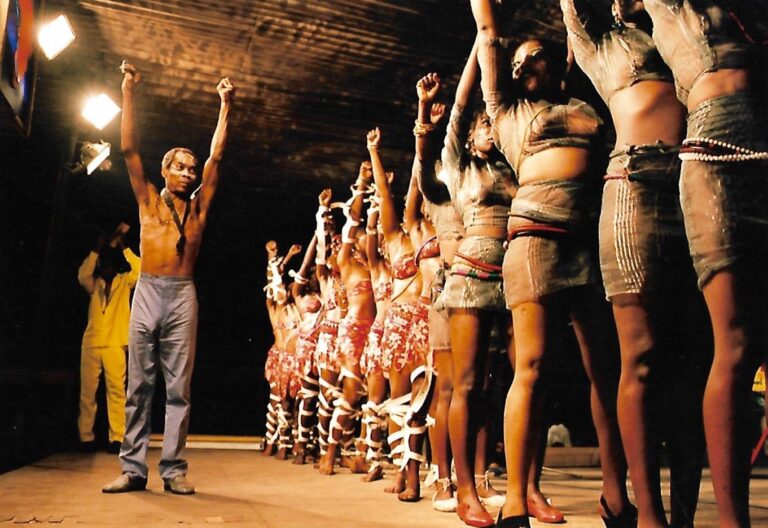
Large numbers of Yoruba descendants can be found in Brazil, Cuba, Trinidad and Tobago, Haiti, and other parts of the Americas. Despite displacement, many retained elements of Yoruba culture, religion, music, and language.
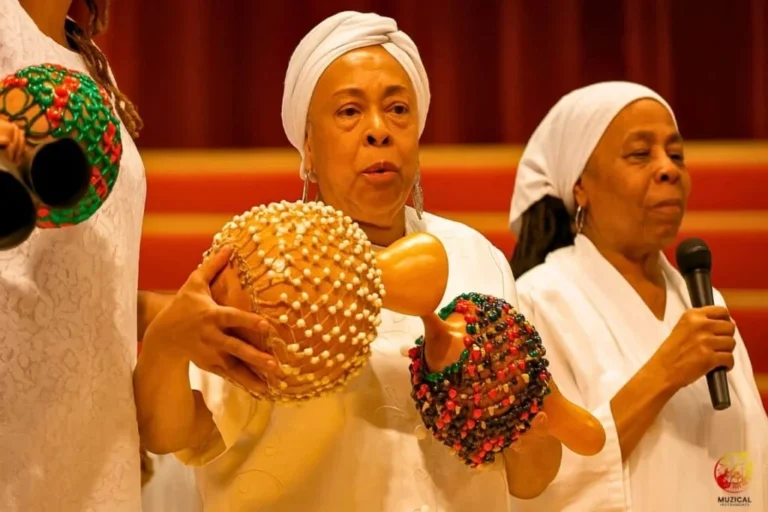
Religious traditions such as Candomblé in Brazil and Santería in Cuba contain strong Yoruba influences that remain visible today.
The global Yoruba diaspora stands as a testament to the resilience and enduring legacy of the Yoruba people.
Modern Understanding of Yoruba Origins
Today, scholars recognize that Yoruba origins cannot be explained by a single narrative. Oral traditions, archaeological evidence, linguistic studies, and historical research all contribute valuable perspectives.
For many Yoruba people, the story of Oduduwa remains a cherished symbol of identity and unity. At the same time, scientific research provides insights into the gradual development of Yoruba civilization through centuries of cultural interaction and social evolution.
Rather than contradicting one another, these perspectives enrich our understanding of Yoruba heritage.
Conclusion
The origins of the Yoruba people represent one of Africa’s most fascinating historical stories. From the sacred traditions of Ile-Ife and Oduduwa to the archaeological evidence of ancient urban civilization, the Yoruba have built a legacy that continues to inspire millions around the world.
Their achievements in governance, art, religion, language, trade, and cultural preservation have earned them a distinguished place in world history. Although debates about specific origins continue, there is little doubt that the Yoruba people have created one of the most enduring and influential civilizations on the African continent.
As new discoveries emerge and future generations continue to celebrate their heritage, the story of Yoruba origins remains a powerful reminder of the creativity, resilience, and greatness of the Yoruba people.