The Impact of the Atlantic Slave Trade on Yoruba Society
Introduction
The Atlantic Slave Trade was one of the most tragic and transformative events in world history. Between the fifteenth and nineteenth centuries, millions of Africans were forcibly removed from their homelands and transported across the Atlantic Ocean to the Americas. Among the many African peoples affected by this vast human tragedy were the Yoruba.
The slave trade had profound consequences for Yoruba society. It disrupted political systems, altered economic structures, caused population losses, fueled warfare, and separated families on an enormous scale. At the same time, it unintentionally spread Yoruba culture across the globe, leading to the establishment of vibrant Yoruba-descended communities in the Americas and the Caribbean.
The legacy of the Atlantic Slave Trade continues to shape Yoruba identity, historical memory, and cultural influence today. Understanding this period is essential to understanding both the challenges and resilience of the Yoruba people.

The Atlantic Slave Trade: An Overview
The Atlantic Slave Trade developed as European colonial powers expanded into the Americas.
Plantations producing:
- Sugar
- Cotton
- Tobacco
- Coffee
- Rice
required large labor forces.
European traders turned to Africa as a source of enslaved labor.
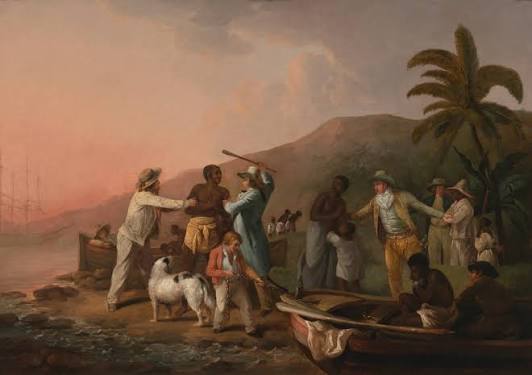
Over several centuries, millions of Africans were captured, sold, and transported across the Atlantic under brutal conditions.
The journey, known as the Middle Passage, was notorious for suffering, disease, and high mortality rates.
The trade became one of the largest forced migrations in human history.
Yorubaland Before the Slave Trade
Before the Atlantic Slave Trade reached its peak, Yorubaland was home to thriving kingdoms and city-states.
These included:
- Oyo
- Ife
- Ijebu
- Owu
- Ketu
- Ondo
- Ekiti communities
The region enjoyed:
- Agricultural productivity
- Commercial prosperity
- Cultural development
- Political organization
Trade existed long before European contact, but it generally involved goods rather than large-scale export of human beings.
The arrival of European demand for enslaved labor gradually transformed regional dynamics.
Early European Contact
Portuguese traders were among the first Europeans to establish regular contact with West African coastal communities.
Initially, trade focused on goods such as:
- Gold
- Ivory
- Pepper
- Textiles
Over time, however, enslaved people became the most profitable commodity.
As European demand increased, the slave trade expanded dramatically.
This development had far-reaching consequences for societies throughout West Africa, including the Yoruba.
How Yoruba People Entered the Slave Trade
The Yoruba were not heavily involved in the early phases of the Atlantic Slave Trade.
However, by the eighteenth and nineteenth centuries, increasing political instability contributed to the enslavement of many Yoruba people.
Several factors played a role:
Warfare
Conflicts produced prisoners who could be sold into slavery.
Political Rivalries
Defeated opponents sometimes became captives.
Raids
Communities were occasionally attacked for the purpose of capturing people.
Criminal Punishment
Certain offenders could be enslaved under traditional legal systems.
European demand intensified these practices by creating a lucrative market for captives.
The Decline of the Oyo Empire
One of the most significant developments affecting Yoruba involvement in the slave trade was the decline of the Oyo Empire.
As Oyo weakened during the late eighteenth and early nineteenth centuries:
- Political stability declined.
- Military conflicts increased.
- Regional rivalries intensified.
- Security deteriorated.
These conditions created opportunities for slave traders.
The collapse of centralized authority made many communities vulnerable to attacks and enslavement.
The resulting instability contributed significantly to the export of Yoruba captives.
The Yoruba Wars and Enslavement
The nineteenth-century Yoruba Wars were particularly devastating.
Conflicts among various Yoruba states produced large numbers of prisoners.
Many captives were sold through coastal trading networks and transported to the Americas.
Entire communities experienced:
- Destruction
- Displacement
- Family separation
- Population decline
The wars therefore became a major source of enslaved Yoruba people during the final decades of the Atlantic Slave Trade.
Coastal Slave Trading Centers
Several coastal locations became important centers of slave export.
These ports connected inland communities to transatlantic markets.
Captives were transported from the interior to coastal facilities where they were held before embarkation.
Conditions in these holding areas were often harsh and overcrowded.
Many individuals spent weeks or months awaiting transport.
The experience marked the beginning of a traumatic journey that would permanently alter their lives.
The Middle Passage
The Middle Passage refers to the voyage across the Atlantic Ocean.
For enslaved Africans, including many Yoruba captives, this journey was marked by immense suffering.
People were confined in crowded ship holds under extremely difficult conditions.
Common hardships included:
- Disease
- Malnutrition
- Physical abuse
- Psychological trauma
- High mortality rates
Many did not survive the voyage.
Those who did were transported to unfamiliar lands where they faced enslavement and exploitation.
Yoruba Communities in the Americas
Large numbers of Yoruba captives were taken to:
- Brazil
- Cuba
- Trinidad and Tobago
- Haiti
- Jamaica
- Other parts of the Caribbean
- Latin America
Despite the hardships of slavery, many retained elements of their cultural heritage.
They preserved:
- Religious beliefs
- Music
- Language elements
- Naming traditions
- Oral histories
These cultural survivals became the foundation of enduring Afro-descendant communities.
The Preservation of Yoruba Religion
One of the most remarkable aspects of the Yoruba diaspora is the survival of traditional religious practices.
In the Americas, Yoruba spiritual traditions evolved into religious systems such as:
- Candomblé in Brazil
- Santería in Cuba
- Lucumí traditions
- Trinidad Orisha practices
Although influenced by local conditions and other religious traditions, these systems retained strong Yoruba foundations.
Many Orisha continued to be honored centuries after the arrival of enslaved ancestors.
This cultural continuity represents an extraordinary act of resilience.
Language and Cultural Survival
While complete preservation of the Yoruba language proved difficult under slavery, many words and expressions survived.
Elements of Yoruba language can still be found in:
- Religious ceremonies
- Songs
- Ritual chants
- Personal names
These linguistic traces serve as reminders of ancestral connections.
Cultural memory allowed descendants to maintain links to their Yoruba heritage even after generations of separation.
Economic Impact on Yorubaland
The slave trade affected the Yoruba economy in complex ways.
Some individuals and states profited from participation in the trade.
However, the long-term consequences were often harmful.
Negative effects included:
- Population loss
- Labor shortages
- Agricultural disruption
- Increased insecurity
- Economic instability
Communities that lost large numbers of productive members often struggled to recover.
The trade distorted economic priorities and encouraged conflict.
Social Consequences
The social impact of the slave trade was profound.
Families were separated, communities fragmented, and social trust weakened.
The fear of capture affected everyday life.
Many people relocated to more secure areas, contributing to migration and urbanization.
Traditional relationships were disrupted as warfare and slave raiding intensified.
These social changes left lasting scars on Yoruba society.
Political Consequences
Political instability both contributed to and resulted from the slave trade.
Competition for resources and power intensified conflicts among states.
The weakening of established institutions made it more difficult to maintain peace and security.
The decline of major political centers further increased vulnerability.
These developments reshaped the political landscape of Yorubaland during the nineteenth century.
Resistance to the Slave Trade
Yoruba communities did not simply accept the slave trade.
Various forms of resistance emerged.
These included:
- Escaping captivity
- Defending settlements
- Establishing fortified towns
- Opposing slave raids
- Negotiating alliances for protection
In the Americas, enslaved Yoruba individuals also resisted through:
- Rebellions
- Cultural preservation
- Community organization
- Religious practice
Resistance became an important aspect of the Yoruba experience.
Returnees to West Africa
Following the abolition of the slave trade, some descendants of enslaved Yoruba people returned to West Africa.
These returnees settled in areas such as:
- Lagos
- Abeokuta
- Other coastal communities
Often known as returnees or repatriates, they brought new skills, ideas, and experiences.
Their contributions influenced:
- Architecture
- Education
- Commerce
- Religion
- Politics
The return migration created new connections between Africa and the diaspora.
Abolition and the End of the Trade
During the nineteenth century, growing opposition to slavery led many countries to abolish the Atlantic Slave Trade.
British naval patrols worked to suppress slave trafficking along the West African coast.
Although illegal trade continued for some time, the transatlantic system gradually declined.
The end of the trade did not immediately erase its consequences.
Its effects continued to shape societies on both sides of the Atlantic.
The Global Yoruba Diaspora
Today, millions of people of Yoruba descent live outside Africa.
The diaspora has made important contributions to:
- Music
- Religion
- Literature
- Politics
- Education
- Business
Yoruba cultural traditions continue to flourish in communities around the world.
This global presence is one of the enduring legacies of the Atlantic Slave Trade.
Lessons from History
The history of the slave trade teaches important lessons:
- Human dignity must be protected.
- Economic profit should never justify exploitation.
- Cultural resilience can survive adversity.
- Historical memory is essential for justice and understanding.
By studying this history, future generations can better appreciate the value of freedom and human rights.
Remembering the Victims
Millions of lives were affected by the Atlantic Slave Trade.
Remembering their experiences honors their suffering and resilience.
Museums, memorials, academic research, and cultural programs help preserve this memory.
For the Yoruba people, remembrance serves not only as an acknowledgment of tragedy but also as a celebration of survival.
The descendants of those who endured slavery continue to contribute to societies around the world.
Conclusion
The Atlantic Slave Trade profoundly transformed Yoruba society. It caused immense suffering, disrupted political and social systems, and led to the forced migration of countless individuals. Yet it also gave rise to a global Yoruba diaspora whose cultural influence continues to be felt across continents.
Through religion, music, language, and community traditions, Yoruba descendants preserved important aspects of their heritage despite the brutal realities of slavery. Their resilience ensured that Yoruba culture would not disappear but instead become a global force.
The history of the Atlantic Slave Trade remains one of the darkest chapters in human history, but it is also a story of survival, adaptation, and enduring cultural strength. The legacy of the Yoruba people stands as a powerful testament to the human capacity to preserve identity even in the face of unimaginable hardship.