Yoruba Cuisine – Traditional Foods, Cooking Methods, and Cultural Significance
Introduction
Food is one of the most powerful expressions of culture, identity, and community. Among the Yoruba people, cuisine occupies a central place in daily life, family relationships, celebrations, religious observances, and cultural traditions. Yoruba food is known for its rich flavors, diverse ingredients, nutritional value, and deep connection to history and local environments.
For centuries, Yoruba communities have developed culinary traditions based on agriculture, trade, innovation, and cultural exchange. These traditions have produced some of the most beloved dishes in Nigeria and across West Africa.
Yoruba cuisine is more than a collection of recipes. It reflects the values of hospitality, family unity, hard work, and communal living. Meals bring people together, strengthen social bonds, and preserve cultural identity.
This article explores the history, ingredients, cooking techniques, cultural significance, and enduring appeal of Yoruba cuisine.

The Importance of Food in Yoruba Culture
Food plays an essential role in Yoruba society.
Meals are associated with:
- Family gatherings
- Religious ceremonies
- Festivals
- Weddings
- Naming ceremonies
- Funerals
Sharing food symbolizes:
- Friendship
- Hospitality
- Community
- Generosity
Offering food to guests is considered a sign of respect and goodwill.
This tradition remains an important aspect of Yoruba social life.
Agriculture and the Origins of Yoruba Cuisine
The development of Yoruba cuisine is closely connected to agriculture.
For centuries, Yoruba farmers cultivated crops such as:
- Yam
- Cassava
- Maize
- Vegetables
- Beans
- Plantain
Agricultural abundance enabled the creation of a wide variety of dishes.
Local ingredients shaped regional food traditions and culinary creativity.
Staple Foods in Yoruba Society
Several staple foods form the foundation of Yoruba cuisine.
These include:
- Yam
- Cassava
- Maize
- Rice
- Beans
Staples provide energy and are often served alongside soups, stews, and sauces.
Their versatility contributes to the diversity of Yoruba cooking.
Yam: The King of Crops
Yam occupies a special place in Yoruba culture.
Historically, it has been one of the most important food crops.
Yam symbolizes:
- Prosperity
- Hard work
- Abundance
It can be prepared in various ways, including:
- Boiling
- Frying
- Roasting
- Pounding
Its cultural significance extends beyond nutrition.
Yam often features in ceremonies and festivals.
Pounded Yam
One of the most famous Yoruba dishes is pounded yam.
The preparation involves:
- Boiling yam.
- Pounding it into a smooth, elastic consistency.
Traditionally, the pounding process required significant physical effort.
Today, modern tools often simplify preparation.
Pounded yam is typically served with soups and remains a favorite for special occasions.
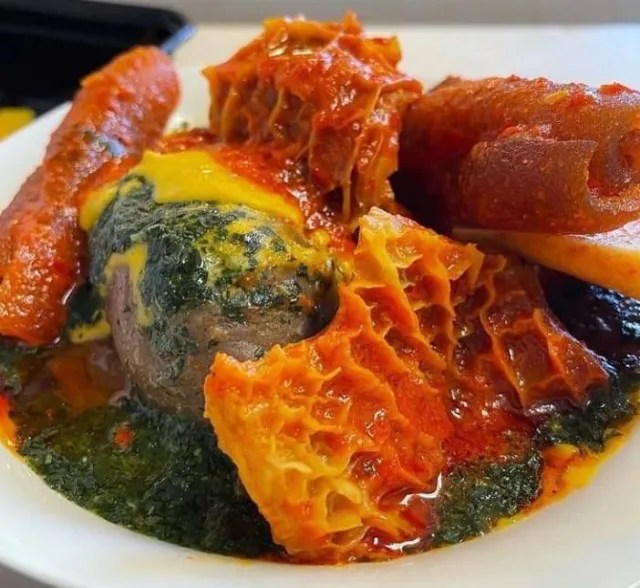
Amala
Amala is one of the most iconic Yoruba foods.
It is made from:
- Yam flour (Amala Isu)
- Cassava flour (Amala Lafun)
- Plantain flour (Amala Ogede)
Amala possesses a distinctive texture and flavor.
It is especially popular in Oyo and surrounding regions.
Many consider it an essential part of Yoruba culinary identity.
Eba
Eba is made from processed cassava flour known as garri.
Preparation involves mixing garri with hot water to create a smooth, dough-like consistency.
Eba is:
- Affordable
- Nutritious
- Easy to prepare
Its popularity extends throughout Nigeria.
It is commonly paired with soups and stews.
Fufu
Fufu is another important staple food.
Traditionally prepared from cassava or other starchy crops, it resembles pounded yam in texture.
Fufu is widely consumed across West Africa and occupies an important place in Yoruba cuisine.
Its versatility contributes to its enduring popularity.
Rice in Yoruba Cuisine
Rice has become increasingly important in Yoruba diets.
Popular rice dishes include:
- White rice with stew
- Jollof rice
- Fried rice
Rice is often served during:
- Celebrations
- Family gatherings
- Religious events
Its convenience and adaptability have enhanced its popularity.
Beans and Their Importance
Beans are highly valued for their nutritional content.
They provide:
- Protein
- Fiber
- Essential nutrients
Beans are used in numerous Yoruba dishes, including:
- Ewa Agoyin
- Moi Moi
- Akara
These dishes remain staples in many households.
Akara
Akara consists of bean cakes made from blended beans and spices.
The mixture is deep-fried until golden brown.
Akara is commonly eaten:
- As breakfast
- As a snack
- During special occasions
Its flavor and nutritional value contribute to its popularity.
Moi Moi
Moi Moi is a steamed bean pudding.
Ingredients often include:
- Beans
- Peppers
- Onions
- Seasonings
Additional ingredients such as fish or eggs may be included.
Moi Moi is widely appreciated for its taste and nutritional benefits.
It is frequently served at celebrations.
Yoruba Soups
Soups occupy a central place in Yoruba cuisine.
They are commonly eaten with:
- Amala
- Pounded yam
- Eba
- Fufu
Popular Yoruba soups include:
- Ewedu
- Egusi
- Gbegiri
- Okra soup
Each possesses distinctive flavors and preparation methods.
Ewedu Soup
Ewedu is made from jute leaves.
The soup is known for:
- Its smooth texture
- Nutritional benefits
- Cultural significance
Ewedu is often served with Amala.
Together, they form one of the most iconic combinations in Yoruba cuisine.
Gbegiri Soup
Gbegiri is a bean-based soup.
It is often paired with:
- Ewedu
- Amala
This combination is particularly popular in Oyo and surrounding areas.
The dish exemplifies the creativity of Yoruba culinary traditions.
Egusi Soup
Egusi soup is prepared using ground melon seeds.
Common ingredients include:
- Vegetables
- Meat
- Fish
- Seasonings
Its rich flavor and nutritional value have made it one of Nigeria’s most beloved soups.
Yoruba cooks have developed numerous variations of the dish.
Okra Soup
Okra soup is another popular Yoruba delicacy.
The soup is appreciated for:
- Its texture
- Nutritional content
- Versatility
It may be prepared with various proteins and vegetables.
Its popularity extends beyond Yorubaland.
Pepper and Seasoning
Yoruba cuisine often features bold flavors.
Common seasonings include:
- Peppers
- Onions
- Locust beans (Iru)
- Ginger
- Garlic
These ingredients contribute to the distinctive taste of many dishes.
Flavorful cooking remains a hallmark of Yoruba culinary culture.
Iru: Fermented Locust Beans
Iru is one of the most important traditional seasonings.
Made from fermented locust beans, it provides:
- Rich flavor
- Aroma
- Nutritional benefits
Many Yoruba soups and stews rely on Iru for their characteristic taste.
Its use reflects indigenous culinary knowledge.
Meat and Fish
Protein sources commonly used in Yoruba cooking include:
- Beef
- Goat meat
- Chicken
- Fish
- Snails
The choice often depends on:
- Availability
- Occasion
- Personal preference
Protein-rich dishes are particularly important during celebrations.
Traditional Cooking Methods
Yoruba cooks employ various methods, including:
- Boiling
- Frying
- Roasting
- Steaming
- Grilling
These techniques have been refined over generations.
Traditional cooking emphasizes both flavor and nutritional value.
Street Foods
Street food occupies an important place in Yoruba culinary life.
Popular options include:
- Akara
- Roasted corn
- Plantain
- Suya
- Boli
Street vendors contribute significantly to local food culture and economies.
Food and Celebrations
Special occasions often feature elaborate meals.
Events such as:
- Weddings
- Festivals
- Naming ceremonies
provide opportunities to showcase culinary skills and hospitality.
Food is often central to the success of these gatherings.
Hospitality and Generosity
Hospitality is a deeply respected Yoruba value.
Guests are often welcomed with food and refreshments.
Providing nourishment demonstrates:
- Respect
- Kindness
- Generosity
This tradition strengthens social relationships and community bonds.
Religious and Cultural Significance
Food also plays roles in religious and cultural observances.
Certain dishes may be prepared for:
- Festivals
- Ritual ceremonies
- Family celebrations
These practices connect culinary traditions with broader cultural values.
Yoruba Cuisine in the Diaspora
Members of the Yoruba diaspora continue to prepare traditional foods around the world.
Restaurants and cultural organizations help preserve culinary heritage.
Traditional dishes provide connections to:
- Family history
- Community identity
- Cultural memory
Food remains an important aspect of cultural continuity.
Modern Influences
Contemporary Yoruba cuisine continues to evolve.
Modern influences include:
- New ingredients
- International cuisines
- Technological innovations
Despite these changes, traditional dishes remain highly valued.
Many families maintain recipes passed down through generations.
Health and Nutrition
Many Yoruba foods offer significant nutritional benefits.
Traditional diets often include:
- Vegetables
- Legumes
- Complex carbohydrates
- Protein sources
Balanced meals contribute to overall well-being.
Modern nutrition research increasingly recognizes the value of many traditional foods.
Preservation of Culinary Heritage
Efforts to preserve Yoruba cuisine include:
- Cookbooks
- Culinary festivals
- Educational programs
- Cultural documentation
These initiatives help ensure that traditional recipes and techniques survive.
Preservation strengthens cultural identity.
Lessons from Yoruba Cuisine
Yoruba culinary traditions teach valuable lessons:
- Food brings people together.
- Hospitality strengthens communities.
- Tradition and innovation can coexist.
- Agriculture supports cultural development.
- Cultural heritage deserves preservation.
These lessons remain relevant today.
Conclusion
Yoruba cuisine represents one of the richest culinary traditions in Africa. Through staple foods, soups, stews, snacks, and celebratory dishes, generations of Yoruba people have developed a food culture that combines flavor, nutrition, creativity, and cultural meaning.
From Amala and Ewedu to Akara, Moi Moi, and Egusi soup, Yoruba dishes continue to nourish both body and spirit. They serve as symbols of hospitality, family unity, and cultural pride.
As Yoruba communities continue to preserve and celebrate their culinary heritage, these traditions will remain an enduring and delicious part of one of Africa’s greatest civilizations.