Chief Obafemi Awolowo – Architect of Modern Yorubaland
Introduction
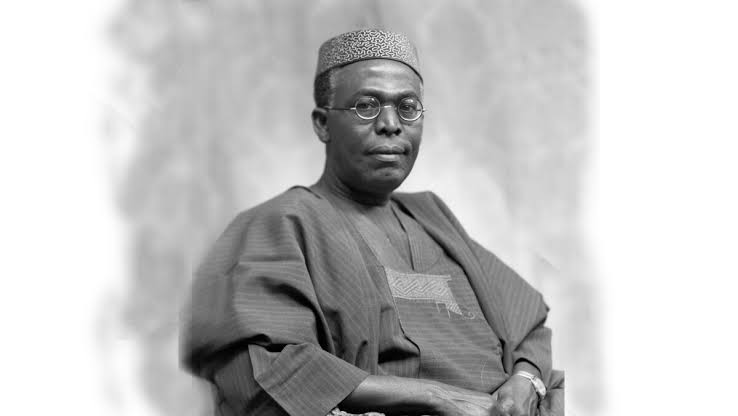
Few individuals have shaped the political, educational, economic, and social development of Yorubaland as profoundly as Obafemi Awolowo. Revered by many as the architect of modern Yorubaland, Awolowo was a visionary leader whose ideas transformed not only the Western Region of Nigeria but also influenced the course of Nigerian history.
His commitment to education, social welfare, economic development, federalism, and good governance earned him a lasting place among Africa’s most influential statesmen. Decades after his death, his policies continue to be studied, debated, and admired.
For millions of Yoruba people, Awolowo remains a symbol of progressive leadership, intellectual excellence, and public service.

Early Life and Family Background
Obafemi Awolowo was born on March 6, 1909, in Ikenne.
He grew up in a modest family and experienced many of the challenges faced by ordinary Nigerians during the colonial era.
His parents emphasized:
- Hard work
- Discipline
- Education
- Moral responsibility
These values would influence his character throughout his life.
Even as a young boy, Awolowo demonstrated exceptional intelligence and determination.
His early experiences shaped his understanding of poverty, inequality, and the importance of opportunity.
Education and Self-Development
Awolowo’s educational journey was marked by perseverance.
Unlike some future leaders who enjoyed privileged backgrounds, he worked in various occupations to support his studies.
He served as:
- Teacher
- Clerk
- Journalist
- Trader
While working, he continued to pursue education.
His dedication eventually enabled him to study law in the United Kingdom.
Education became one of the central themes of his life because he personally understood its transformative power.
Legal Training and Return to Nigeria
After studying law in London, Awolowo qualified as a barrister.
His exposure to political ideas, constitutional systems, and international affairs broadened his perspective.
Upon returning to Nigeria, he established a successful legal practice.
However, his ambitions extended beyond personal success.
He increasingly devoted his attention to public affairs and political reform.
He believed that Nigeria required visionary leadership capable of addressing both colonial domination and social inequality.
Early Political Activities
Awolowo entered politics during a period of growing nationalist sentiment.
Many Nigerians were demanding:
- Greater representation
- Constitutional reforms
- Self-government
- Economic opportunities
Awolowo distinguished himself through his intellectual rigor and organizational ability.
He became known as a thoughtful political thinker who approached problems systematically.
His writings demonstrated a deep concern for governance, development, and social justice.
The Formation of Egbe Omo Oduduwa
One of Awolowo’s most important early achievements was helping establish Egbe Omo Oduduwa.
The organization sought to promote:
- Yoruba unity
- Cultural development
- Educational advancement
- Political participation
Although cultural in nature, the organization also contributed to political mobilization.
It encouraged Yoruba people to work collectively toward common goals.
The movement strengthened regional consciousness and community organization.
Founding the Action Group
In 1951, Awolowo helped establish the Action Group.
The party became one of Nigeria’s most influential political organizations.
Its platform emphasized:
- Education
- Economic development
- Social welfare
- Democratic governance
Under Awolowo’s leadership, the Action Group gained widespread support throughout Western Nigeria.
The party’s success reflected the appeal of its progressive agenda.
Premier of the Western Region
Awolowo became the first Premier of the Western Region in 1954.
This position provided an opportunity to implement many of his ideas.
His administration focused on:
- Modernization
- Infrastructure
- Education
- Healthcare
- Agricultural development
The Western Region soon became one of the most dynamic and progressive parts of Nigeria.
Its achievements attracted attention both within and outside Africa.
Free Primary Education
Perhaps Awolowo’s most celebrated achievement was the introduction of free primary education.
At the time, access to education remained limited for many families.
Awolowo believed that education was essential for:
- Economic growth
- Social mobility
- Democratic participation
- National development
His government invested heavily in schools and teacher training.
The policy dramatically increased enrollment and literacy rates.
Millions of children benefited from opportunities that had previously been unavailable.
Educational Legacy
The impact of Awolowo’s educational reforms cannot be overstated.
The policy produced generations of:
- Teachers
- Doctors
- Engineers
- Lawyers
- Civil servants
- Entrepreneurs
Many beneficiaries later became leaders in various fields.
The educational foundation established during his administration contributed significantly to the development of Yorubaland.
Even today, free education remains one of the policies most closely associated with his legacy.
Free Healthcare Initiatives
Awolowo also prioritized public health.
His administration introduced programs aimed at improving healthcare access.
These initiatives included:
- Medical facilities
- Preventive healthcare
- Child welfare services
Improved health outcomes contributed to broader social development.
The emphasis on public welfare reflected his belief that government should serve the needs of ordinary citizens.
Economic Development Programs
Awolowo understood that education alone was insufficient.
Economic development required investment in infrastructure and productive industries.
His government promoted:
- Agricultural modernization
- Industrial growth
- Road construction
- Public enterprises
These efforts strengthened the regional economy and created employment opportunities.
The Western Region became a model for development planning.
The Western Nigeria Television Service
One of the most remarkable achievements of Awolowo’s administration was the establishment of television broadcasting.
The Western Nigeria Television Service became the first television station in tropical Africa.
This accomplishment demonstrated the region’s commitment to innovation and modernization.
It also highlighted Awolowo’s belief in the importance of information and public education.
Cooperative Development
Awolowo strongly supported cooperative movements.
He encouraged farmers and traders to organize cooperatives that would:
- Increase productivity
- Improve bargaining power
- Promote economic independence
These organizations helped strengthen local economies and reduce poverty.
The cooperative model reflected his emphasis on collective advancement.
Federalism and Constitutional Thought
Awolowo was one of Nigeria’s most important advocates of federalism.
He argued that a diverse country like Nigeria required a political system that respected regional identities while maintaining national unity.
His views influenced constitutional debates for decades.
Federalism became one of the defining features of his political philosophy.
Many scholars regard him as one of Nigeria’s most influential constitutional thinkers.
Role in the Nationalist Movement
Beyond regional politics, Awolowo played a major role in Nigeria’s struggle for self-government.
He participated in constitutional conferences and political negotiations that shaped the country’s future.
His contributions helped advance the cause of independence.
Although he often disagreed with political rivals, he remained committed to democratic principles.
Opposition Politics
Awolowo spent significant portions of his career in opposition.
Despite political setbacks, he continued to advocate for:
- Social justice
- Educational investment
- Democratic governance
- Economic development
His ability to maintain influence outside government reflected the strength of his ideas and public support.
Imprisonment and Political Challenges
The political crises of the 1960s brought serious difficulties.
Awolowo faced accusations that led to imprisonment.
His supporters viewed the charges as politically motivated.
During this period, he became a symbol of resilience for many Nigerians.
His eventual release restored him to national prominence.
The Nigerian Civil War
During the Nigerian Civil War, Awolowo served in the federal government.
His role included significant economic responsibilities.
The period remains one of the most debated aspects of his career.
Nevertheless, his influence on national policy remained considerable.
Personal Characteristics
Several qualities contributed to Awolowo’s reputation:
Discipline
He maintained high personal standards.
Vision
He focused on long-term development goals.
Integrity
Supporters admired his commitment to public service.
Intellectual Rigor
His policies were grounded in careful analysis.
These characteristics helped distinguish him from many contemporaries.
Influence on Yoruba Identity
Awolowo’s leadership had a profound impact on Yoruba society.
He became associated with:
- Educational advancement
- Progressive politics
- Regional development
- Cultural pride
For many Yoruba people, he represented the possibility of combining tradition with modernization.
His example continues to inspire community leaders.
Legacy in Modern Nigeria
Awolowo’s ideas remain influential in contemporary political discussions.
Debates concerning:
- Education
- Federalism
- Social welfare
- Economic planning
often reference his contributions.
Many of his proposals continue to shape public policy conversations.
His legacy extends far beyond Yorubaland.
Honors and Recognition
Following his death in 1987, Awolowo’s reputation continued to grow.
Numerous institutions, roads, schools, and public facilities bear his name.
He is widely regarded as one of Nigeria’s greatest statesmen.
His achievements are studied by historians, political scientists, and public administrators.
Lessons from Awolowo’s Life
Awolowo’s career offers valuable lessons:
- Education is a foundation for development.
- Leadership requires vision and planning.
- Public service should prioritize the common good.
- Democracy benefits from informed participation.
- Long-term thinking produces lasting results.
These lessons remain relevant today.
Conclusion
Chief Obafemi Awolowo stands among the most influential figures in Yoruba and Nigerian history. Through visionary leadership, innovative policies, and unwavering commitment to public welfare, he transformed the Western Region into a model of development and progress.
His introduction of free primary education, support for healthcare, promotion of economic development, and advocacy of federalism left a lasting mark on society. More than a politician, Awolowo was a thinker, reformer, and nation-builder whose ideas continue to influence generations.
For many Yoruba people, he remains the architect of modern Yorubaland—a leader whose legacy demonstrates the power of vision, education, and dedicated public service in shaping a better future.