Yoruba Art, Sculpture, and the Famous Ife Bronzes
Introduction
The Yoruba people possess one of the richest artistic traditions in Africa and the world. For centuries, Yoruba artists have produced extraordinary works of sculpture, metal casting, wood carving, beadwork, textiles, architecture, and ceremonial objects that reflect the sophistication of their civilization.
Among the most celebrated achievements of Yoruba art are the famous Ife bronzes and terracotta sculptures, masterpieces that astonished the world with their realism, technical excellence, and artistic beauty. These works challenged long-held misconceptions about African societies and demonstrated the advanced cultural and intellectual achievements of pre-colonial Yorubaland.
Yoruba art is more than decoration. It serves religious, political, historical, and educational purposes. Through artistic expression, generations of Yoruba people have preserved their beliefs, celebrated their leaders, honored their ancestors, and communicated important cultural values.
This article explores the development of Yoruba art, the significance of sculpture, and the enduring legacy of the renowned Ife bronzes.

The Importance of Art in Yoruba Society
Art occupies a central place in Yoruba civilization.
Historically, artistic creations were used to:
- Honor rulers
- Celebrate religious traditions
- Preserve history
- Express spiritual beliefs
- Strengthen community identity
Unlike purely decorative art, many Yoruba artistic works served practical and symbolic functions.
Artists were respected members of society because their creations contributed to cultural continuity and communal life.
Art was viewed as both a skill and a sacred responsibility.
The Philosophy of Yoruba Art
Yoruba artistic traditions emphasize more than physical appearance.
Artists seek to capture:
- Character
- Spiritual power
- Moral qualities
- Social status
- Cultural ideals
Beauty is often associated with balance, harmony, dignity, and inner character.
As a result, Yoruba art frequently combines realism with symbolic meaning.
This philosophical approach contributes to the uniqueness of Yoruba artistic expression.
Early Development of Yoruba Art
The origins of Yoruba art extend deep into antiquity.
Archaeological discoveries indicate that artistic production flourished in Yorubaland long before European contact.
Early artists worked with materials such as:
- Clay
- Wood
- Stone
- Metal
- Ivory
These materials were transformed into objects serving religious, political, and social purposes.
The continuity of artistic traditions over centuries reflects the stability and sophistication of Yoruba civilization.
Ile-Ife: The Artistic Capital
No city is more important to the history of Yoruba art than Ile-Ife.
Known as the spiritual heart of the Yoruba people, Ife also emerged as one of Africa’s greatest artistic centers.
Between approximately the twelfth and fifteenth centuries, Ife artists produced works of remarkable quality.
These included:
- Bronze heads
- Terracotta sculptures
- Stone carvings
- Religious objects
The artistic achievements of Ife remain among the most celebrated in world history.
Discovery of the Ife Bronzes
The modern world first became widely aware of Ife’s artistic achievements during the twentieth century.
Archaeologists and researchers uncovered sculptures displaying extraordinary realism and craftsmanship.
The discoveries surprised many observers.
At the time, some scholars incorrectly assumed that such sophisticated works could not have originated in Africa.
Further research demonstrated conclusively that these masterpieces were created by Yoruba artists.
The discoveries transformed understanding of African art history.
What Are the Ife Bronzes?
The term “Ife bronzes” refers to a collection of metal sculptures produced in ancient Ile-Ife.
Many of these works depict:
- Kings
- Queens
- Priests
- Nobles
- Important historical figures
The sculptures are renowned for:
- Naturalistic proportions
- Detailed facial features
- Technical precision
- Artistic elegance
Although commonly called bronzes, some were made using brass and other metal alloys.
Their quality rivals that of celebrated artistic traditions elsewhere in the world.
The Lost-Wax Casting Technique
One of the most remarkable aspects of the Ife bronzes is the technology used to create them.
Artists employed a sophisticated process known as lost-wax casting.
The process involved:
- Creating a wax model.
- Covering the model with clay.
- Heating the mold so the wax melted away.
- Pouring molten metal into the cavity.
- Breaking the mold after cooling.
This technique required extraordinary skill and precision.
Its successful use demonstrates advanced metallurgical knowledge.
Realism in Ife Sculpture
The realism of Ife sculptures is one of their most distinctive features.
Artists captured:
- Facial expressions
- Anatomical proportions
- Hairstyles
- Jewelry
- Clothing details
Many works appear strikingly lifelike.
This realism contrasts with artistic traditions that emphasize abstraction.
The achievement highlights the sophistication of Yoruba aesthetic principles.
The Famous Bronze Heads
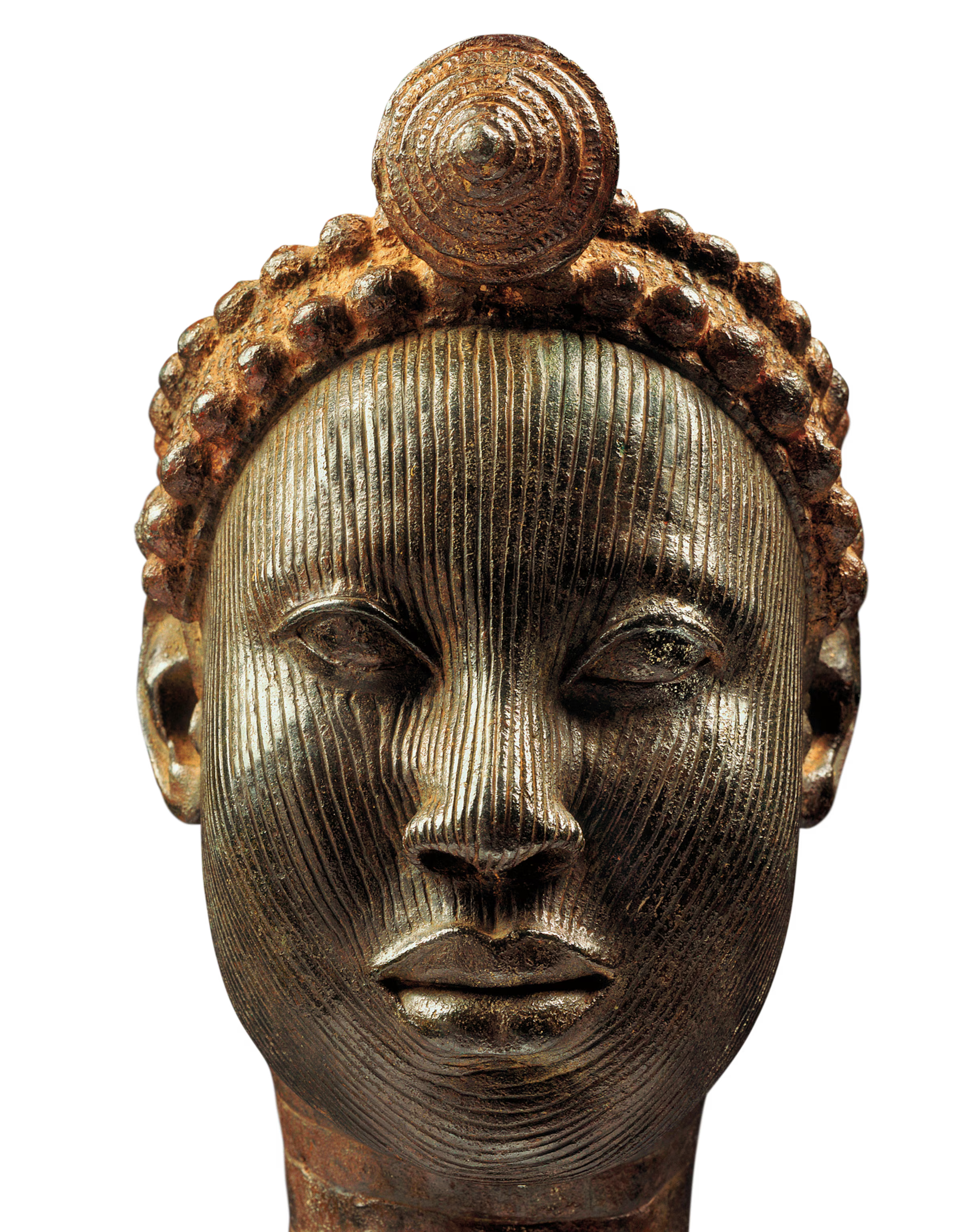
Among the most celebrated Ife artworks are the bronze heads.
These sculptures are often interpreted as representations of rulers or important individuals.
Characteristics include:
- Detailed facial features
- Intricate crowns
- Refined craftsmanship
- Naturalistic proportions
The heads may have served ceremonial or commemorative purposes.
Today, they are recognized as masterpieces of world art.
Terracotta Sculptures of Ife
In addition to metalworks, Ife artists produced extraordinary terracotta sculptures.
These clay figures depict:
- Men
- Women
- Children
- Leaders
- Spiritual figures
Many display the same realism found in bronze works.
The terracottas provide valuable insights into clothing, hairstyles, and cultural practices of ancient Yorubaland.
Art and Kingship
Art played an important role in Yoruba political life.
Royal courts commissioned artistic works to:
- Celebrate rulers
- Reinforce authority
- Preserve historical memory
Sculptures often symbolized the connection between kingship and spirituality.
Art helped communicate political legitimacy and social order.
The relationship between art and governance remains a recurring theme in Yoruba history.
Religious Significance of Sculpture
Many Yoruba sculptures possess religious significance.
Artworks were used in connection with:
- Orisha worship
- Ancestor veneration
- Ritual ceremonies
- Sacred festivals
These objects served as points of spiritual focus.
Artists therefore contributed directly to religious life.
Their work helped maintain relationships between communities and the spiritual world.
Wood Carving Traditions
Wood carving represents another important Yoruba artistic tradition.
Carvers created:
- Doors
- Masks
- Shrine objects
- Furniture
- Ceremonial staffs
Wood carvings often feature symbolic imagery and intricate designs.
The tradition remains vibrant today.
Many contemporary artists continue techniques passed down through generations.
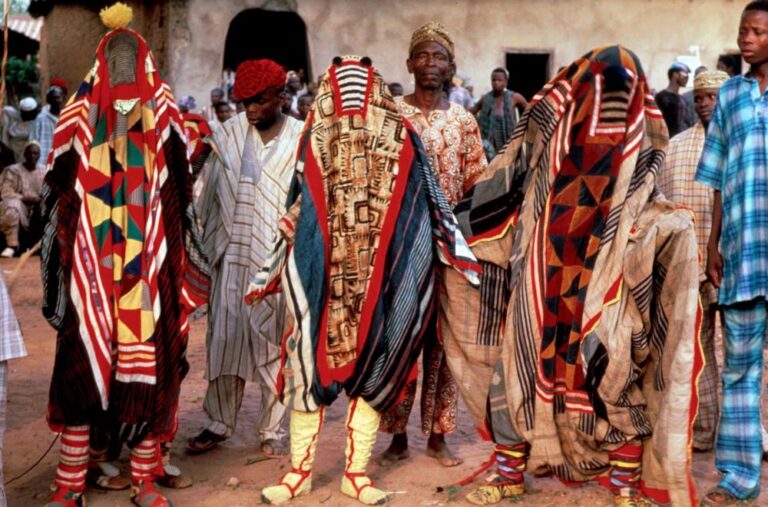
Beadwork and Royal Regalia
Beads occupy a special place in Yoruba culture.
Artisans use them to create:
- Crowns
- Necklaces
- Robes
- Ceremonial objects
Royal beadwork symbolizes:
- Authority
- Prestige
- Spiritual power
The craftsmanship involved is highly specialized.
Beadwork remains an important component of Yoruba ceremonial life.
Textile Arts
Yoruba textile traditions are equally impressive.
Notable examples include:
- Aso Oke weaving
- Adire cloth production
- Embroidery
- Decorative fabric design
These textiles serve both practical and symbolic purposes.
Patterns often communicate social status, identity, and cultural values.
Yoruba fabrics have gained international recognition for their beauty and craftsmanship.
Art as Historical Record
Before widespread literacy, art helped preserve history.
Sculptures, carvings, and ceremonial objects recorded:
- Important events
- Royal lineages
- Religious traditions
- Cultural values
Art functioned as a visual archive.
It enabled communities to transmit knowledge across generations.
This educational role remains significant.
The Influence of Yoruba Art Beyond Africa
The impact of Yoruba art extends far beyond the African continent.
Artists and scholars worldwide have drawn inspiration from Yoruba traditions.
Yoruba influences can be observed in:
- Modern sculpture
- Contemporary painting
- Religious art
- Museum collections
The global appreciation of Yoruba art reflects its universal significance.
Colonial Collecting and Museum Collections
During the colonial era, many Yoruba artworks were removed from their original locations.
Today, important collections can be found in museums across:
- Europe
- North America
- Africa
This history raises important discussions concerning:
- Cultural heritage
- Ownership
- Repatriation
Many communities seek greater recognition of the origins and significance of these works.
Contemporary Yoruba Artists
Modern Yoruba artists continue to innovate while drawing upon traditional heritage.
Contemporary works explore themes such as:
- Identity
- History
- Spirituality
- Modernization
Artists combine traditional techniques with new materials and ideas.
This creativity demonstrates the continuing vitality of Yoruba artistic culture.
Art and Cultural Identity
Art remains a powerful expression of Yoruba identity.
Through artistic traditions, communities celebrate:
- Heritage
- History
- Spirituality
- Creativity
These expressions strengthen cultural pride and encourage intergenerational learning.
Art continues to connect the past with the present.
Lessons from Yoruba Artistic Traditions
The history of Yoruba art teaches valuable lessons:
- Creativity flourishes in every civilization.
- Art preserves memory and identity.
- Technical excellence can coexist with spiritual meaning.
- Cultural heritage deserves protection.
- Beauty and wisdom often reinforce one another.
These lessons remain relevant in the modern world.
The Enduring Legacy of the Ife Bronzes
The Ife bronzes remain among humanity’s greatest artistic achievements.
Their significance lies not only in their beauty but also in what they reveal about Yoruba civilization.
They demonstrate:
- Technical sophistication
- Intellectual achievement
- Cultural richness
- Historical continuity
The bronzes continue to inspire admiration from scholars, artists, and visitors around the world.
Conclusion
Yoruba art stands among the greatest artistic traditions in human history. Through sculpture, metal casting, wood carving, beadwork, and textile production, Yoruba artists created works of extraordinary beauty and meaning.
The famous Ife bronzes, with their remarkable realism and technical mastery, remain powerful symbols of the sophistication of ancient Yorubaland. Together with other artistic traditions, they demonstrate the creativity, intelligence, and cultural depth of the Yoruba people.
Today, Yoruba art continues to inspire and educate. Its enduring legacy reminds the world that artistic excellence is a universal human achievement and that the cultural heritage of Yorubaland remains one of Africa’s greatest contributions to civilization.