Yoruba Migration Across West Africa
Introduction
The history of the Yoruba people is not confined to the boundaries of modern-day Nigeria. For centuries, Yoruba communities have moved across West Africa, establishing settlements, building kingdoms, creating trade networks, and spreading their language and culture far beyond their ancestral homeland.
Migration has been a defining feature of Yoruba history. Some movements were peaceful and driven by trade, agriculture, and opportunities for expansion. Others resulted from wars, political conflicts, environmental changes, or the search for security. Through these migrations, Yoruba culture became one of the most influential cultural traditions in West Africa.
Today, significant Yoruba populations can be found not only in Nigeria but also in Benin, Togo, Ghana, Sierra Leone, Côte d’Ivoire, and other parts of the region. The story of Yoruba migration reveals the resilience, adaptability, and entrepreneurial spirit of a people who carried their traditions wherever they settled.

Understanding Migration in Yoruba History
Migration refers to the movement of people from one location to another, either temporarily or permanently. Throughout history, migration has occurred for various reasons:
- Search for fertile farmland
- Expansion of trade opportunities
- Political disputes
- Warfare and insecurity
- Religious influences
- Population growth
- Economic advancement
For the Yoruba, migration was often both a necessity and an opportunity. Rather than abandoning their identity, migrating communities typically carried their language, customs, religious practices, and political traditions with them. As a result, Yoruba culture remained remarkably durable even as populations spread across vast distances.
The Central Role of Ile-Ife
According to Yoruba traditions, many migrations originated from Ile-Ife. As the spiritual and ancestral homeland of the Yoruba people, Ife occupies a special place in migration narratives. Oral histories often describe princes, chiefs, hunters, traders, and settlers leaving Ife to establish new communities. These migrants carried with them:
- Political institutions
- Religious beliefs
- Language and dialects
- Royal traditions
- Cultural practices
Over time, these settlements developed into independent kingdoms while retaining connections to their ancestral origins. The influence of Ife can therefore be seen throughout Yorubaland and beyond.
The Expansion of Yoruba Kingdoms
One of the earliest forms of migration involved the establishment of new kingdoms. As populations grew, groups moved outward from existing centers to occupy new territories. This process led to the creation of numerous Yoruba kingdoms, including:
- Oyo
- Ijebu
- Ondo
- Ketu
- Sabe
- Owu
- Ekiti communities
- Akure
- Ilesa
- Egba settlements
These migrations expanded Yoruba influence across a broad geographic area. Each kingdom developed unique characteristics while maintaining cultural ties to the wider Yoruba world.
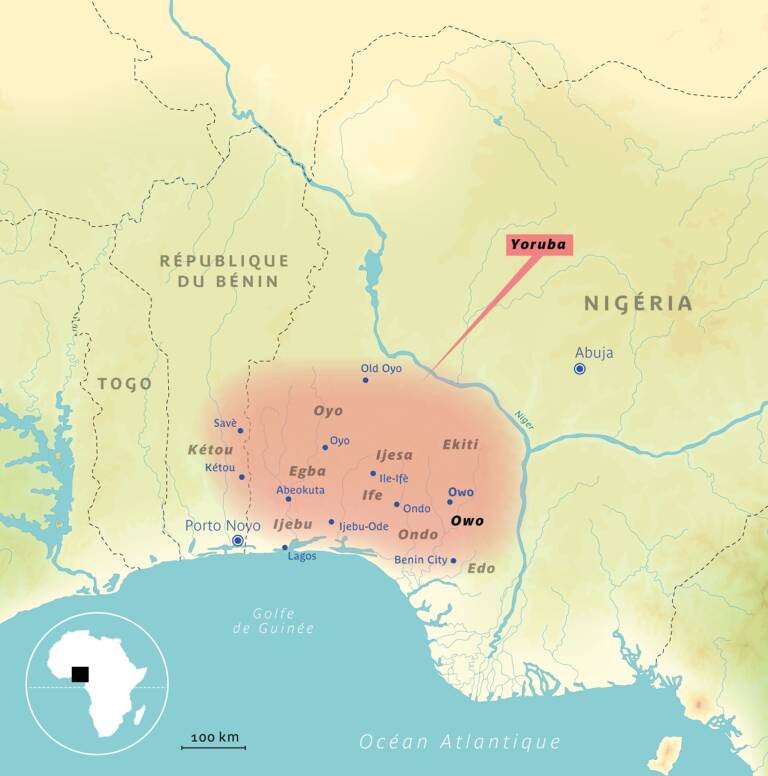
Migration into Present-Day Benin
Some of the most significant Yoruba migrations occurred westward into what is now the Republic of Benin. Several Yoruba-speaking communities became established in this region. Among the best-known groups are:
Ketu
Ketu became one of the most important Yoruba kingdoms outside modern Nigeria. It maintained strong cultural and political links with other Yoruba states.
Sabe
The Kingdom of Sabe also traced its origins to Yoruba migrations. Its rulers preserved traditions connected to Ile-Ife and Oduduwa.
Porto-Novo Region
Many Yoruba-speaking people settled in areas around Porto-Novo, where Yoruba culture remains influential today. These communities contributed significantly to the cultural diversity of Benin.
Yoruba Presence in Togo
Yoruba migration also extended into parts of present-day Togo. Although smaller in number than populations in Nigeria and Benin, Yoruba communities established settlements and trading centers within the region. These communities maintained:
- Yoruba language
- Traditional festivals
- Religious practices
- Family structures
- Commercial networks
Generations later, many descendants continue to preserve elements of their Yoruba heritage.
Trade as a Driver of Migration
Commerce was one of the most important factors encouraging migration. Yoruba traders traveled extensively throughout West Africa in search of markets and economic opportunities. Trade routes connected Yoruba communities with:
- Hausa states
- Nupe territories
- Dahomey
- Ghanaian communities
- Coastal trading centers
Merchants often settled in locations where business opportunities were favorable. These settlements sometimes evolved into permanent communities. As a result, Yoruba commercial activity became a major force in regional integration.
The Role of Women in Commercial Migration
Yoruba women played a particularly important role in migration associated with trade. Throughout history, women have been prominent participants in market activities and long-distance commerce. Many female traders traveled between cities and regions, establishing economic relationships that strengthened cultural connections. Their activities contributed to:
- Wealth creation
- Community development
- Cultural exchange
- Family mobility
The entrepreneurial spirit of Yoruba women remains one of the most distinctive features of Yoruba society.
The Impact of the Oyo Empire
The rise of the Oyo Empire accelerated migration throughout West Africa. As Oyo expanded, soldiers, administrators, traders, and artisans moved into newly influenced territories. Imperial expansion created opportunities for:
- Settlement
- Commerce
- Cultural diffusion
- Political integration
The empire’s extensive trade networks encouraged mobility and connected diverse populations. Many communities incorporated aspects of Yoruba culture through these interactions. The influence of Oyo extended far beyond its political boundaries.
Migration During the Yoruba Wars
One of the largest waves of Yoruba migration occurred during the nineteenth century. Following the decline of the Oyo Empire, Yorubaland experienced a period of conflict known as the Yoruba Wars. These wars displaced large numbers of people. Communities relocated to safer areas in search of security and stability. This period contributed to the growth of cities such as:
- Ibadan
- Abeokuta
- Ijebu-Ode
- Ogbomoso
Refugees often established new settlements that later became important political and economic centers. The migrations reshaped the demographic landscape of Yorubaland.
The Founding of Abeokuta
A notable example of migration resulting from conflict is the founding of Abeokuta. Groups fleeing warfare sought protection among massive rock formations that provided natural defenses. These migrants included various Egba communities. Over time, Abeokuta developed into a major city known for:
- Trade
- Education
- Political leadership
- Cultural innovation
Its history illustrates how migration can lead to the creation of new centers of civilization.
Religious Migration
Religion also influenced Yoruba migration patterns. Priests, diviners, and spiritual leaders traveled widely to serve communities and establish shrines. The worship of various Orisha spread through these movements. Religious migration contributed to:
- Cultural continuity
- Preservation of traditions
- Expansion of spiritual networks
Sacred knowledge was carried from one generation and region to another through these journeys.
Educational and Professional Migration
In more recent centuries, education and employment have become important reasons for migration. Yoruba people have moved throughout West Africa in pursuit of:
- Academic opportunities
- Professional careers
- Government service
- Business ventures
These movements have strengthened the presence of Yoruba communities in major cities across the region. At the same time, migrants have contributed significantly to national development in their host countries.
Cultural Influence Beyond Yorubaland
Migration facilitated the spread of Yoruba culture across West Africa. Influences can be observed in:
Language
Yoruba words and expressions entered local vocabularies.
Religion
Traditional beliefs influenced neighboring communities.
Music
Yoruba rhythms and instruments became widely known.
Fashion
Clothing styles spread through trade and migration.
Cuisine
Foods and cooking methods gained popularity in various regions. The result was a vibrant exchange of cultural ideas.
Preservation of Identity
Despite living outside their ancestral homeland, many Yoruba migrants preserved a strong sense of identity. This was achieved through:
- Family traditions
- Community organizations
- Religious practices
- Language use
- Cultural festivals
These institutions helped maintain connections to Yoruba heritage. The ability to preserve identity while adapting to new environments remains one of the strengths of Yoruba communities.
Challenges Faced by Migrants
Migration was not always easy. Yoruba migrants often faced challenges such as:
- Language barriers
- Cultural differences
- Economic uncertainty
- Political instability
- Social integration
Nevertheless, many communities successfully overcame these difficulties through cooperation, entrepreneurship, and resilience. Their achievements contributed to the prosperity of both migrants and host societies.
Modern Yoruba Communities Across West Africa
Today, Yoruba communities can be found throughout West Africa. Significant populations exist in:
- Nigeria
- Benin
- Togo
- Ghana
- Côte d’Ivoire
- Sierra Leone
- Liberia
These communities continue to contribute to commerce, education, politics, religion, and culture. They serve as living examples of the enduring impact of centuries of migration.
Lessons from Yoruba Migration
The history of Yoruba migration teaches several important lessons:
- Adaptability is essential for survival.
- Cultural identity can endure despite displacement.
- Trade promotes cultural exchange.
- Migration can create opportunities for growth.
- Diversity enriches societies.
These lessons remain relevant in an increasingly interconnected world.
Conclusion
The migration of the Yoruba people across West Africa is one of the most significant chapters in the history of the region. Through exploration, trade, state formation, conflict, and opportunity, Yoruba communities spread far beyond their original homeland. Wherever they settled, they carried with them their language, traditions, institutions, and values. Their influence can still be seen today in the cultures, economies, and societies of numerous West African countries.
The story of Yoruba migration is ultimately a story of resilience, adaptability, and cultural strength. It demonstrates how a people can maintain their identity while contributing positively to the broader world around them. Through centuries of movement and change, the Yoruba people have remained connected to their heritage while continuing to shape the future of West Africa.